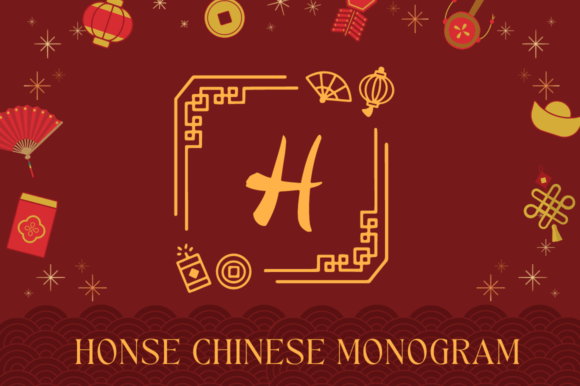
Honse Chinese Monogram: A Decorative Typeface for Meaningful Handmade Moments
It started with a candle label—just one small 2-inch square on a soy wax jar. I’d been testing fonts all morning, trying to land on something that felt both festive and grounded, something that whispered “Chinese New Year” without shouting it. Then I opened Honse Chinese Monogram. Instantly, the design clicked: clean lines, subtle curvature, balanced negative space—and that quiet, confident elegance you only get from a thoughtfully crafted display font.
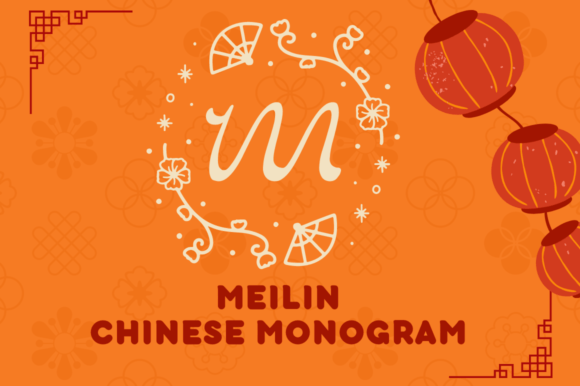
Honse Chinese Monogram is a square-format decorative typeface inspired by traditional Chinese calligraphy—but reimagined for modern makers. It’s not ornate or overly stylized; instead, it balances heritage with clarity. Each character feels intentional—like a carved seal, a pressed stamp, or an ink-brushed monogram. The mood is warm, respectful, and quietly joyful—perfect for celebrations, new beginnings, and handmade gifts meant to be kept.
I first used it on a set of printable greeting cards for Lunar New Year—simple folded A6 cards with red-and-gold accents. The font shines in display use: single characters (like 福 for “blessing”), paired names, or short phrases like “Xīn Nián Kuài Lè.” Because it’s designed as a monogram-style font, it’s strongest at larger sizes—think 36pt and up on printed cards, 48pt+ on wall art or signage. It’s not built for body text, and that’s exactly its strength. It invites focus, slows the eye, and adds instant cultural resonance and visual weight.
Since then, I’ve layered Honse Chinese Monogram across real product workflows: boutique gift tags stitched onto linen drawstring bags, gold-foiled wedding welcome boards beside a farmhouse table, heat-transfer vinyl on organic cotton tote bags, and even engraved wooden coasters. For digital downloads, it’s become my go-to for printable planner pages themed around intention-setting and seasonal renewal—paired with a soft sans serif for subtitles and notes. The contrast works beautifully: Honse holds the meaning; the supporting font carries the message.
When designing physical labels—especially for candles, soaps, or tea tins—I always test readability at actual print size. At 12–16pt on a 1.5" x 1.5" sticker, Honse remains legible if used for single characters or two-syllable names (e.g., “Li Wei” or “Yù Lán”). For longer words or phrases, I scale up or switch to a clean companion font—like Montserrat Light or Playfair Display—for secondary text. That pairing keeps hierarchy clear and maintains brand consistency across packaging, social media graphics, and shop banners.
For Cricut and Silhouette users, the vector outlines cut cleanly—no jagged edges or thin strokes collapsing at small sizes. I’ve run it through my Explore Air 3 at 0.75" height with zero issues on matte vinyl and kraft paper. Just remember: avoid stretching the font manually—its square proportions are part of its charm. Let it breathe. Use it where attention matters.
It’s also found its way into my seasonal packaging system. This year, I printed Honse Chinese Monogram onto kraft gift boxes alongside minimalist botanical line art—each box labeled with a single auspicious character: 寿 (longevity), 喜 (joy), or 安 (peace). Customers don’t need translation to feel the warmth. They see craftsmanship, care, and cultural sincerity—all communicated through typography.
As a decorative font, Honse Chinese Monogram excels in emotional storytelling. On a wedding invitation suite, it transforms “Welcome” into something ceremonial. On a child’s birthday banner—paired with playful script—it adds whimsy with depth. Even on digital listing previews, it lifts thumbnail visuals: a mug mockup with “Lù” (deer, symbolizing prosperity) stands out instantly among generic sans serif listings.
Before using it commercially—whether on mugs, shirts, stickers, or editable Canva templates—I double-checked the license. It includes full commercial rights, supports Latin and basic Chinese characters, and comes in OTF and TTF formats. No ligatures or swashes clutter the set—just clean, consistent glyphs. That simplicity makes it reliable across platforms: web design, editorial design, packaging design, and even social media graphics where file size and rendering matter.
I’ve paired it with several fonts depending on the project’s voice: a light geometric sans (like Poppins) for modern stationery, a gentle serif (Cormorant Garamond) for vintage-inspired wall art, or a delicate handwritten font (Dancing Script) for feminine gift tags. Each time, Honse anchors the composition—not competing, but complementing. Its quiet confidence lets other elements shine while holding the heart of the design.
What makes it especially useful for small shop owners and printable creators is how quickly it elevates perceived value. A $4 digital download feels premium when Honse Chinese Monogram headlines the cover. A $12 candle feels like a curated gift when its label features that same intentional monogram. It doesn’t shout—it resonates. And in a crowded handmade market, resonance builds recognition faster than flash ever could.
Whether you're prepping holiday tags, drafting a wedding welcome board, designing printable wall art for a nursery, or building cohesive branding for your Etsy shop, Honse Chinese Monogram fits naturally into your creative workflow—not as a trend, but as a tool. One that honors tradition while serving today’s making rhythms: thoughtful, tactile, and deeply human.
- Best for: monograms, names, short phrases, decorative titles, and display use
- Works well on: candle labels, greeting cards, wedding signage, tote bags, mugs, digital printables, boutique tags, and seasonal packaging
- Pair with: clean sans serifs, gentle serifs, or soft scripts for balanced hierarchy
- Check before selling: included file formats, commercial license scope, and character set coverage
- Tip: Use at 36pt+ for printed cards and wall art; test at actual size for stickers and small labels